When Law Enforcement Becomes the Villain
- Jantzen Craine
- Jan 30
- 2 min read
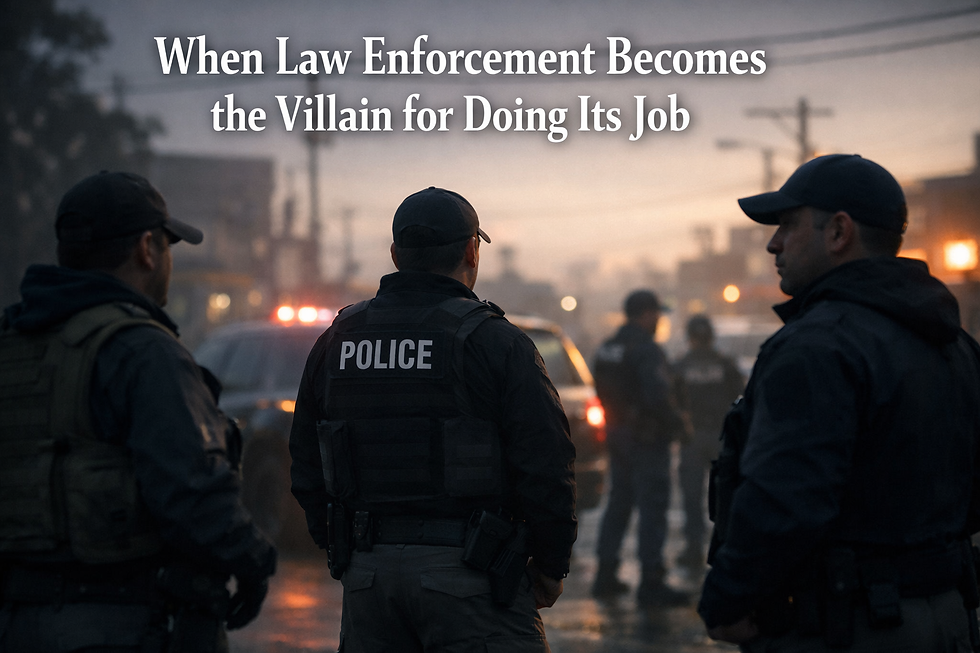
The recent deaths connected to federal immigration enforcement operations are tragic. A loss of life is always serious, and it should never be dismissed or treated casually. But tragedy alone cannot replace judgment — especially when public discussion skips past how these confrontations began and rushes straight to assigning blame.
In both cases now dominating the headlines, federal officers were conducting lawful immigration operations. They were not improvising. They were not acting outside their authority. And they were not confronting peaceful bystanders. In each instance, individuals chose to physically impede law enforcement — blocking officers from reaching people being lawfully apprehended.
That distinction matters.
This country protects peaceful protest. It does not protect physical interference with law enforcement. Those are not the same thing, no matter how often they are blurred together in commentary or on social media.
When citizens insert themselves physically into active law enforcement operations, especially those involving armed officers attempting to apprehend criminal suspects, the risk of serious injury or death increases dramatically. That is not a political opinion. It is reality. Escalation creates danger, whether anyone intends it or not.
Should deadly force have been used in these cases? That question deserves a careful, professional investigation — not instant verdicts delivered online by people who were not there. But another question deserves equal attention and far less seems to be paid to it: why were civilians attempting to block officers from doing their jobs in the first place?
If no one had attempted to interfere with lawful arrests, there would have been no confrontation. That doesn’t make the outcome less tragic. But it does make the chain of events clear.
At this point, critics often raise a familiar charge: Isn’t this hypocritical coming from people who support the Second Amendment? After all, aren’t firearms rights often defended as a safeguard against government overreach? Didn’t the American Revolution begin with resistance to authority?
The answer is no — this isn’t hypocrisy. It’s a misunderstanding of both history and the Second Amendment itself.
The right to bear arms is rooted in self-defense and the preservation of liberty, not in the idea that any disagreement with government policy justifies confrontation with law enforcement. The American Revolution followed sustained, systemic abuses and the absence of lawful remedies — not isolated enforcement actions.
Supporting the Second Amendment does not mean endorsing chaos. It does not mean encouraging citizens to physically obstruct law enforcement whenever they believe a law is unjust.
A lawful government enforcing existing laws through accountable institutions is not tyranny. Officers executing those laws are not an occupying force.
A nation cannot function if the enforcement of its laws is treated as optional or immoral by default.
If we want fewer tragedies, the solution is not to paralyze enforcement. It is to restore clarity: protest peacefully, argue vigorously, vote accordingly — but do not interfere physically with law enforcement operations.
Because when law enforcement becomes the villain simply for doing its job, the rule of law itself is what ends up on trial.


Comments